Do you need a permit for a porta potty in Salinas?
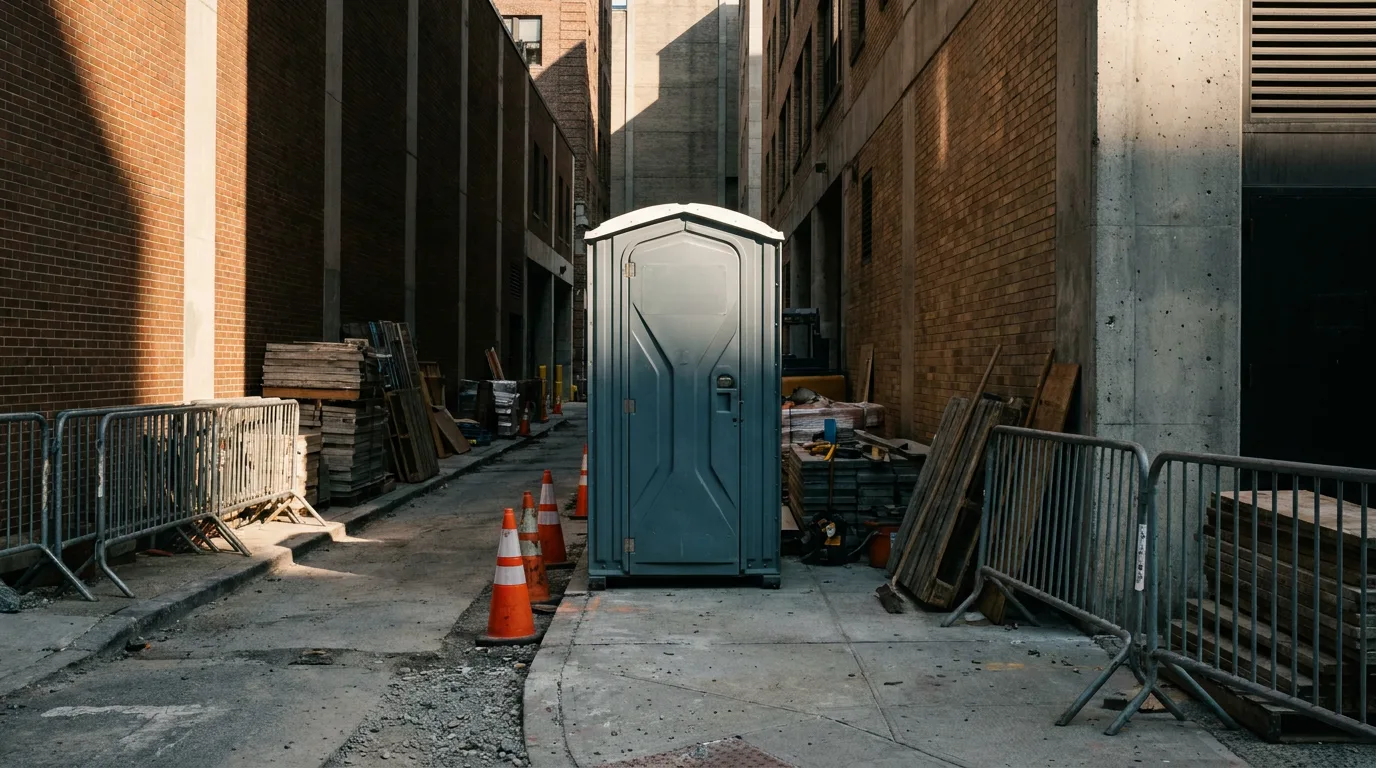
Most residential and construction jobs place the unit on the customer's own lot, driveway, or a fenced site, and that does not typically trigger a city permit process. Salinas Porta Pros delivers to job sites across the city, from construction site services to home renovation porta potty placements, and the deciding factor is almost always location, not the rental itself. If the unit needs to sit on a public street, sidewalk, or curb lane, that is a different situation, and placement in the public right of way needs confirming with the city. We name no specific rule here because permit review, fee schedules, and application steps vary by department and were not verified for this page, and general porta potty rules and regulations differ enough between cities that a rule copied from elsewhere could be wrong here. Call before delivery if there's any doubt. This applies whether you're renting a standard unit, an ADA accessible unit, or a full restroom trailer for a larger crew, and it's the same logic that governs portable toilet rental Delaware crews run into with their own right-of-way rules, or any Delaware porta potty rental job near a public curb.
Where can a porta potty legally sit on my property?
Placement rules on private property are mostly about function, not permits: firm level ground, clearance for the service truck, and a path someone can actually walk. ADA Standards section 302.1 requires floor and ground surfaces to be stable, firm and slip resistant, which matters if you're placing an ADA accessible porta potty on gravel or a slope. A standard unit runs about 44 by 48 inches on the ground and stands roughly 92 inches tall, so give it space away from fences, low branches, and parked equipment. For an accessible unit, ADA Standards section 403.5.1 calls for a 36 inch clear route, and section 304.3.1 requires a 60 inch turning circle nearby. Our porta potty placement guide covers ground surface, wind exposure, and service truck access in more detail. If you're setting up several units for a crew, our how many porta potties do I need guide walks through counts by worker headcount.
What are the rules for porta potties on a construction site?
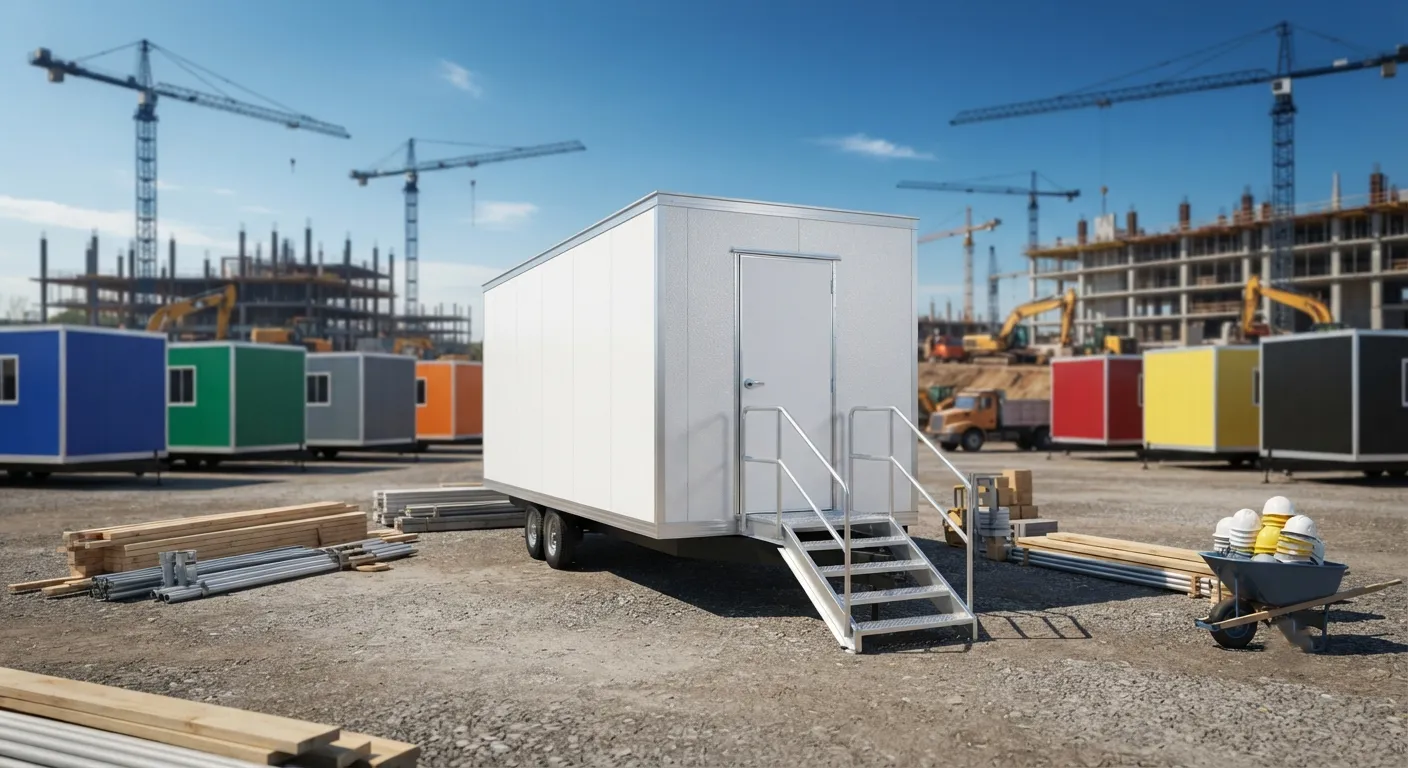
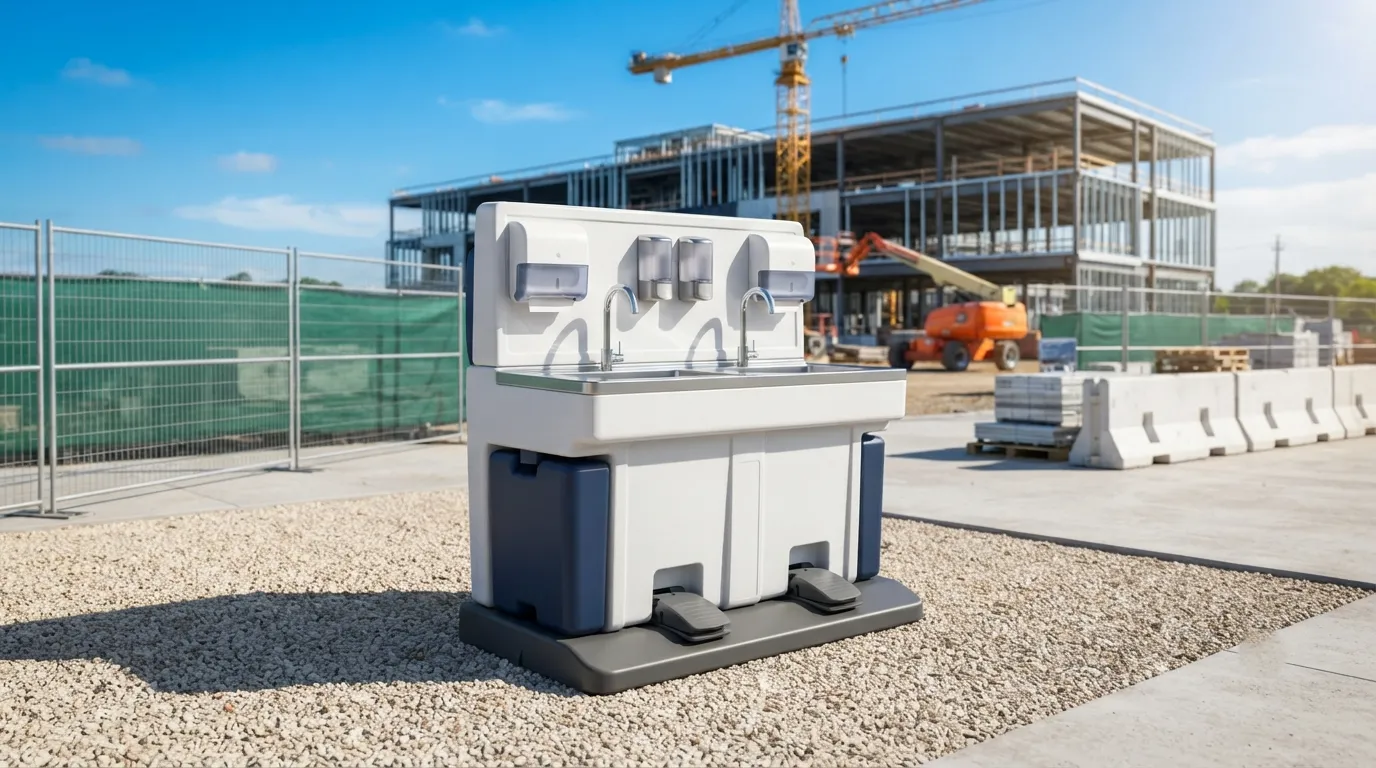
Construction sites fall under OSHA rather than a local permit office for toilet counts. OSHA 1926.51(c) sets the ratio: one toilet for 20 workers or fewer, one toilet seat and one urinal per 40 workers once you pass 20, and one per 50 once you hit 200 workers or more. That standard drives unit count on most Salinas job sites far more than any municipal rule does. Our OSHA portable toilet requirements page breaks the ratio down by crew size. Sites where workers apply paints, coatings, herbicides, or insecticides also trigger OSHA 1926.51(f)(1), which requires washing facilities for those specific contaminant exposures, not general handwashing. Pair that with a handwashing station rental or a portable sink rental to stay covered. Farms with hand-labor crews fall under a different standard, OSHA 1928.110, which calls for potable water, toilets, and handwashing within a quarter mile walk, one per 20 employees; see our farm and agricultural restrooms page for that setup.
Why does dumpster placement have different permit rules than porta potties?
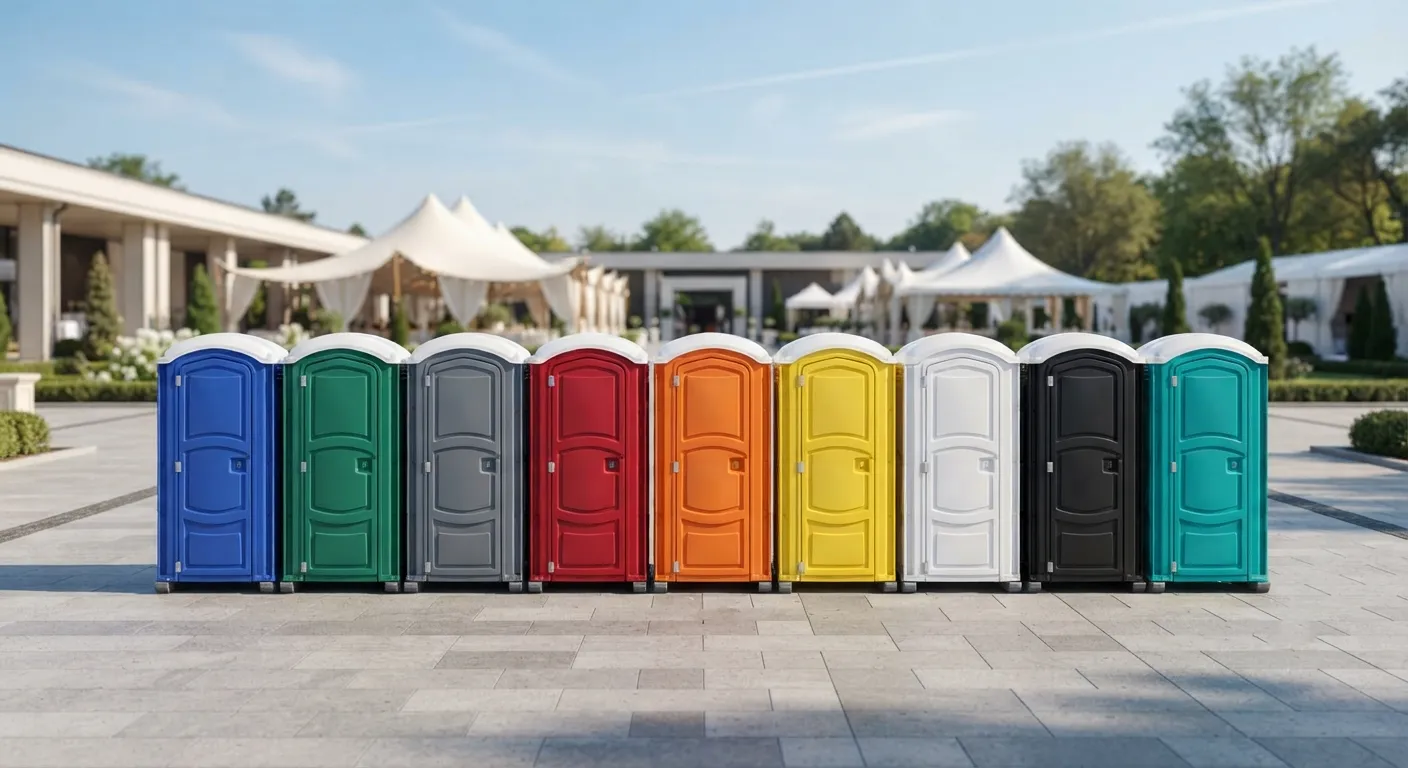
Dumpsters dropped on a public street almost always need a permit; porta potties on private ground almost never do, and that gap trips people up constantly, whether you're asking about a roll-off dumpster rental Delaware job or a driveway in Salinas. A roll-off box sitting in a driveway or side yard on your own property is usually fine without paperwork, but the moment it sits on the street or blocks a sidewalk in Salinas, or a Jersey City dumpster permit situation on the opposite coast, cities generally require a dumpster permit for the street obstruction, not for the debris itself. Our dumpster permit requirements page covers what documentation to gather before delivery. A roll-off delivery needs about 60 feet of straight clearance behind the truck, so measure your driveway or lot before ordering a 10 yard, 20 yard, or 30 yard dumpster. Temporary power poles follow yet another track entirely; a temporary power pole permit often means an electrical permit and inspection tied to the meter connection, so check our temporary power pole page before ordering one alongside your light tower rental.
Pricing snapshot
| item | day | week | month |
|---|---|---|---|
| standard unit | 100-350 | 130-500 | 125-325 |
| ADA unit | 200-400 | 120-240 | n/a |
| deluxe flushable | 85-1200 | 150-290 | n/a |
| dumpster | 51-112 | 426-778 | 91-500 |
A weekend rental of a standard unit typically runs in a separate short-stay bracket, useful for a Saturday event without a full-week commitment. See our porta potty rental cost and porta potty rental per day pages for a fuller breakdown, or monthly porta potty rental if the job runs long.
Do I need a permit to put a porta potty in my driveway?
No. A driveway is private property, and placement there for a renovation, party, or contractor job doesn't typically require city review. Keep it off the sidewalk and street, and give the delivery truck clear access. See home renovation porta potty for driveway-specific setup tips.
Do I need a permit for a dumpster in Salinas?
If the dumpster sits entirely on private property, generally no. If it needs to sit on a public street or block part of the right of way, that typically requires a street obstruction permit, and this needs confirming with the city directly. Check dumpster permit requirements before scheduling delivery.
What size dumpster doesn't need a permit?
Size isn't the deciding factor. Location is. A small 10 yard box on the street can need the same permit as a 40 yard box, while either one sitting in a private lot may need none. Compare sizes on our dumpster sizes and dimensions page.
Are there rules for how close a porta potty can be to a property line?
The FACT BANK doesn't specify a setback distance, and this varies by city and site. What matters more: firm, level ground per ADA Standards 302.1, truck access for servicing, and reasonable distance from windows and entrances. See the porta potty placement guide for setup specifics.
Do I need a permit for an ADA accessible unit at an event?
Permit needs depend on where the unit sits, same as any other unit, not on its accessibility features. ADA Standards section 213.2 requires at least 5 percent of clustered units to be accessible, with a minimum of one. Plan your count using ADA restroom requirements before the event date.
Next step
Get a delivery date
Tell us the address, the dates and the headcount. We size the order and confirm the route.