
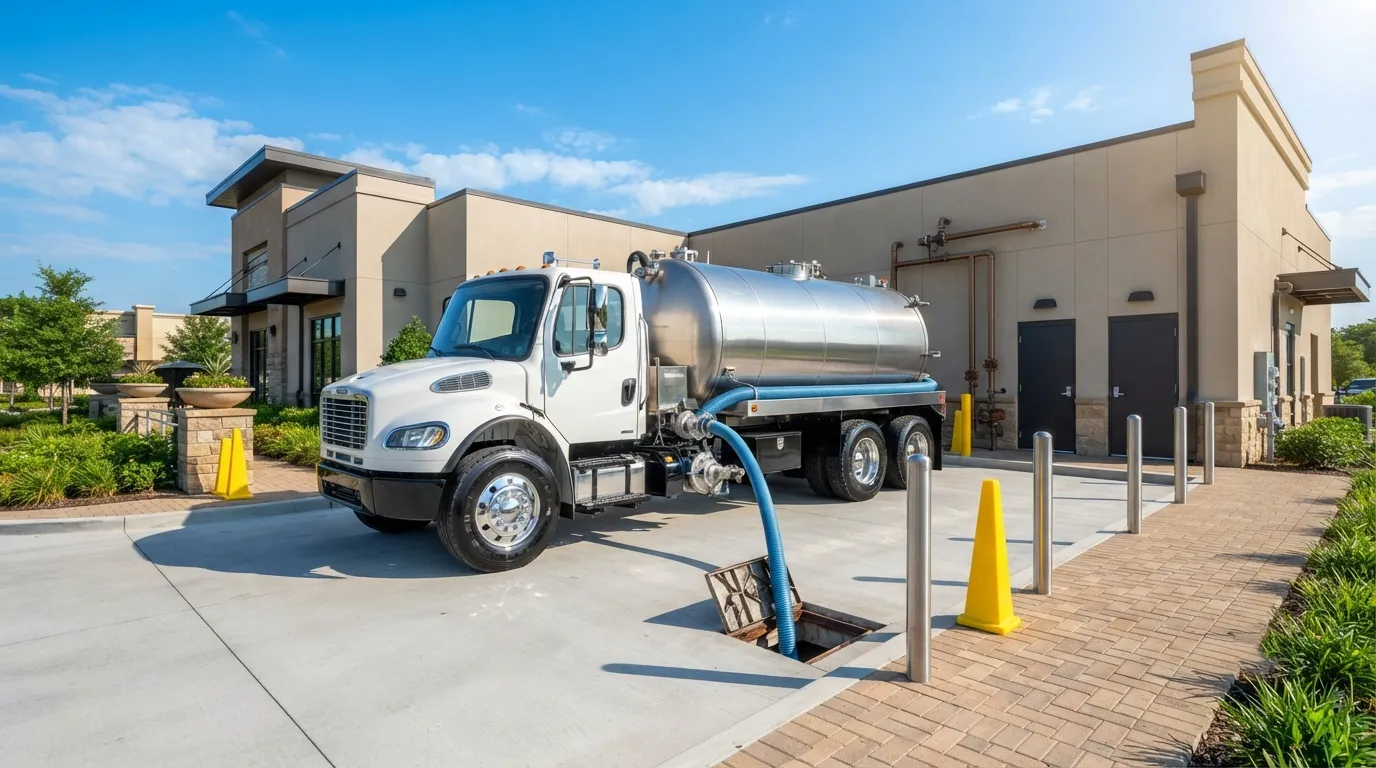
How Often Does a Grease Trap Need Pumping?
The honest answer: it depends on volume, not the calendar. A grease interceptor gets pumped once fats, oils, grease and solids reach 25 percent of the liquid depth, and a busy kitchen hits that line faster than a slow one. Salinas Porta Pros checks depth on every visit instead of guessing from a generic interval, the same way we track usage on a standard porta potty rental before setting a service interval. Restaurants near downtown Salinas often land on a monthly or bi-weekly rhythm once we track a few cycles. If your kitchen shares a lot with retail or office space, pair this with a look at handwashing station requirements and general construction site services if you're mid-remodel. Skipping pumps backs grease into the line, and that backup costs more than the visit would have.
What Does Grease Trap Pumping Cost in Salinas?
Cost depends on trap size and how urgent the call is. A same-day or emergency pump costs more than a scheduled route stop. Below is the general shape of septic and pump-related service pricing we work within, similar in structure to how we price a porta potty rental per day or a monthly porta potty rental.
| service | duration | typical range |
|---|---|---|
| septic pump visit | day | $150 to $300 |
| septic pump visit | weekend | $50 to $150 |
| service fee | day | $100 to $300 |
| service fee | weekend | $400 to $1,200 |
Weekend and after-hours calls carry a premium because we're pulling a truck off another route, the same logic behind weekend pricing on a porta potty rental cost page. If your grease trap is tied to a larger property with a septic system, it's worth reading septic tank pumping cost and how often to pump a septic tank since the two systems often get serviced together. A residential septic tank, by comparison, typically needs pumping every 3 to 5 years depending on tank size and household size, a much longer interval than a working kitchen's grease trap.
Can You Do Emergency Grease Trap Pumping?
Yes. A grease trap that's overflowing or backing up into the kitchen floor drain doesn't wait for a route day. Salinas Porta Pros runs emergency grease trap pumping for kitchens that hit capacity early, whether that's a holiday rush or a fryer that ran longer than planned. We also handle emergency septic service and emergency porta potty rental for sites that need fast sanitation coverage, not just a pump truck, and we can drop a handwashing station rental alongside the pump if the kitchen needs interim washup capacity. Boronda sits about 4.0 miles west of central Salinas and Spreckels about 6.0 miles south, both inside our normal emergency response radius. Farther out, Castroville is 11.3 miles northwest and Marina runs 13.4 miles west; we still cover both, just with a longer drive built into the call, and the same coverage applies to porta potty rental in Monterey, CA and porta potty rental in Watsonville, CA.
Commercial kitchens under health code pressure can't afford a slow response. If your grease trap failure happens during a larger buildout or kitchen renovation, pair the pump with a construction dumpster rental or a roll-off dumpster rental for demo debris, and check dumpster permit requirements before anything lands on a public street, plus what cannot go in a dumpster so grease waste doesn't end up in the wrong bin. For ongoing multi-location accounts, ask about a standing route instead of one-off emergency calls, it costs less over a year and keeps you off the 25 percent line entirely, much like how a recurring holding tank rental beats booking one-off calls for a busy site.
How do I know my grease trap needs pumping?
Watch for slow drains, a sewage smell near the trap, or grease surfacing in the sink. Once fats, oils, grease and solids reach 25 percent of the liquid depth, pumping is due. Waiting past that point risks a backup into the kitchen, which costs more than the scheduled visit.
Is grease trap pumping different from septic pumping?
Yes. A grease trap catches fats and oils from kitchen drains before they reach the sewer line, while a septic system treats all wastewater from a property. Some sites have both. See septic pumping service for full-system service beyond the trap itself, and septic tank warning signs if you're not sure which system is failing.
Do you serve grease trap pumping near me outside Salinas?
We cover Salinas and the nearby towns on our service list, including porta potty rental in Boronda, CA, porta potty rental in Spreckels, CA, Castroville and Marina. Drive distance affects response time on emergency calls. Check service areas for the full coverage map before booking.
What happens to the grease after pumping?
Grease and waste get hauled off for proper disposal, following standard handling for fats, oils and grease waste. We don't leave it on site or dump it into a storm drain. Ask your account rep for documentation if your health inspector requires proof of service.
Can I schedule recurring grease trap pumping?
Yes, and most commercial kitchens do. A recurring schedule based on your trap's fill rate beats reacting to a backup. Contact us through request a quote or contact to set up a route that matches your kitchen's actual volume.

Next step
Get a delivery date
Tell us the address, the dates and the headcount. We size the order and confirm the route.