
How Do Porta Potties Work On a Job Site?
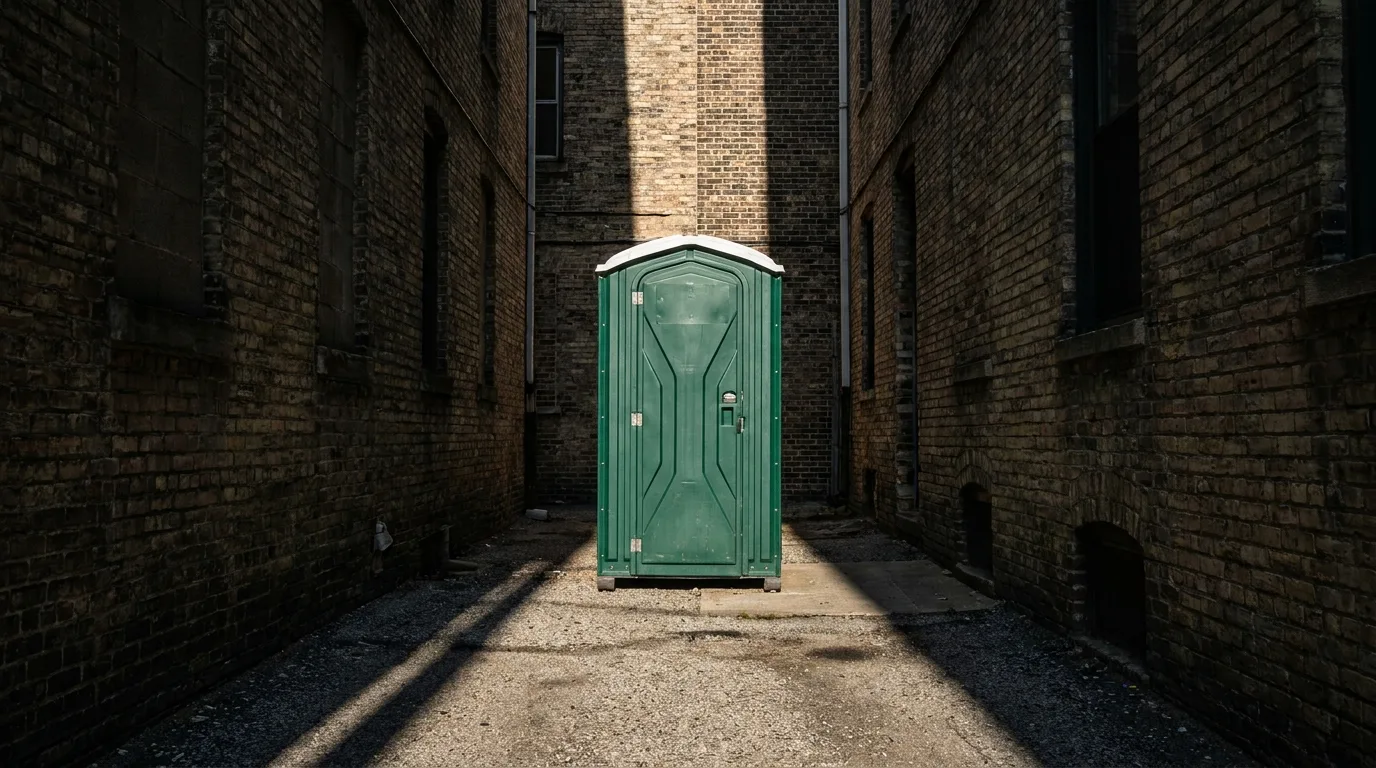
A construction worker running to a porta-potty at lunch doesn't think about what's underneath the seat, but the mechanics matter. Waste drops into the holding tank, where the chemical package keeps it liquid enough to pump and knocks down the smell. There's no flush, no water tank feeding it, just gravity and a sealed compartment. Most units run about 44 by 48 inches on the ground and stand roughly 92 inches tall, so they fit tight job site corners without eating up staging space. For a busy Salinas build site, standard porta potty rental units get serviced on a route, and OSHA 1926.51(c) sets the toilet count crews need to plan around: one unit for 20 workers or fewer, then more seats as headcount climbs past that. If you're not sure how many to order, the porta potty needs calculator walks through it, and OSHA portable toilet requirements covers the ratio in full.
How Does a Flushable Porta Potty Work?
A flushable unit, sometimes called a deluxe model, adds a small onboard freshwater tank and a foot pump or handle that pushes a rinse of water into the bowl after each use. It still drains into the same kind of sealed holding tank underneath, it just feels closer to a bathroom at home. That extra water tank means more weight and a slightly bigger footprint, so deluxe flushable porta potty units usually go to weddings, corporate events and film shoots around Salinas rather than dusty job sites. Some deluxe trailers scale further into full restroom trailer rental setups with multiple stalls, sinks and mirrors, which makes sense for a wedding at a venue 6.0 miles south in Spreckels or an event out toward Boronda, 4.0 miles west. If ADA access matters for the guest list, ADA accessible porta potty units meet ADA Standards 213.2, which requires at least 5 percent of a cluster of units, and never fewer than one, to be accessible.
How Does a Portable Sink Work?
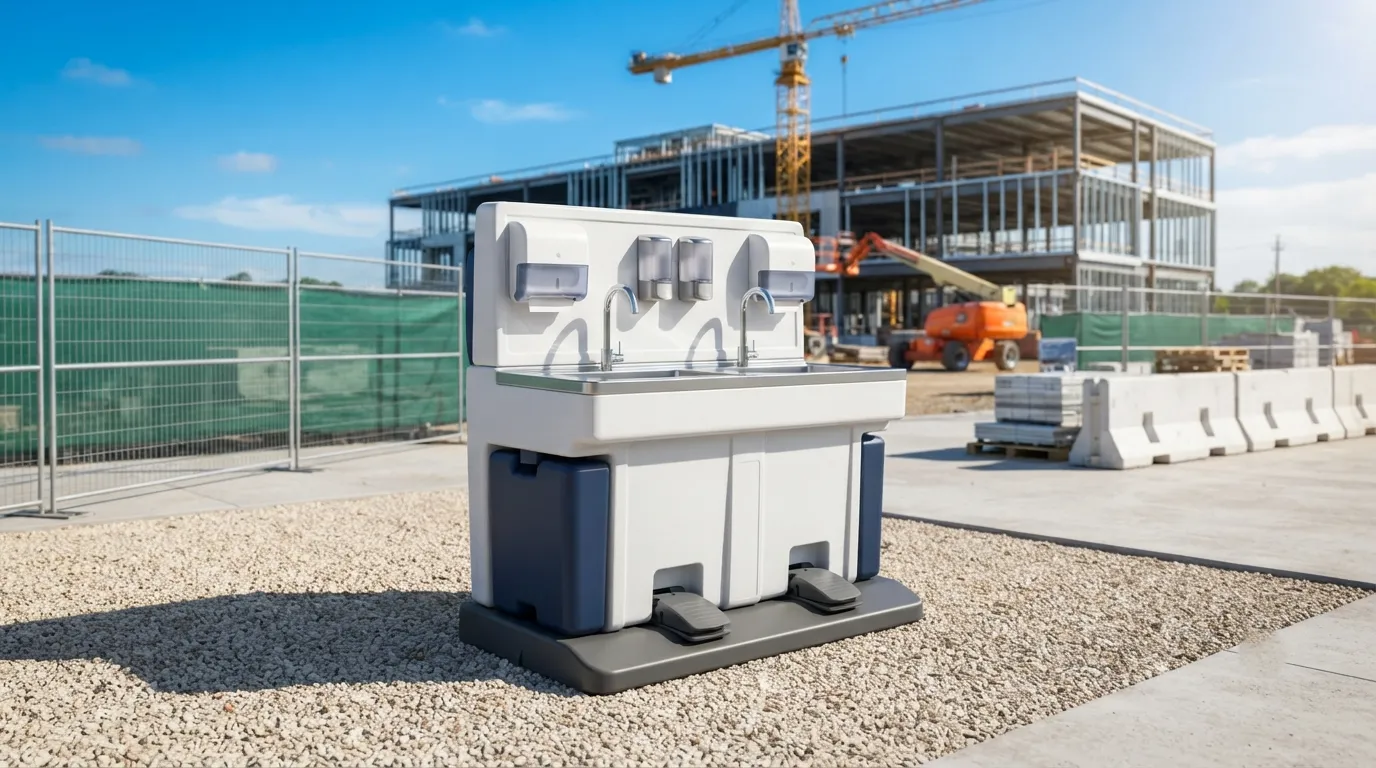
A portable handwashing sink runs on the same no-hookup idea. It has a freshwater tank on top, a foot pump or a gravity valve, and a gray water tank underneath to catch the runoff. Soap dispenser, paper towel holder, done. Under 29 CFR 1910.141(d)(2), washing facilities need soap and towels or a hand-drying device, and hand sanitizer alone doesn't satisfy that. On sites where crews are applying paints, coatings, herbicides or insecticides, OSHA 1926.51(f)(1) kicks in specifically for that kind of exposure, and a portable sink from handwashing station rental covers it. Farm crews around Salinas working hand-labor jobs fall under a different rule, OSHA 1928.110, which calls for one facility per 20 employees within a quarter mile walk, which matters a lot for farm and agricultural restrooms spread across a big field. For something simpler than a full sink setup, portable sink rental and hand sanitizer station rental both fill smaller gaps.

Do Camping Porta Potties Work the Same Way?
Not quite. A camping porta potty is usually a small, self-contained cassette toilet: a seat and bowl on top, a removable waste tank underneath that you carry out and dump yourself. There's no service truck involved, no route, no vacuum pump. It's built for one or two people over a weekend, not a crew of forty. For a group camping trip near Salinas or anywhere along the coast, camping porta potty rentals from Salinas Porta Pros are closer to the standard unit than the cassette style, since they still get serviced on-site rather than dumped by hand.
What Chemicals Go In a Porta Potty Tank?
The blue liquid in the tank is a deodorizing and waste-digesting chemical, and it's what keeps a unit from turning into a real problem between service visits. It breaks down solid waste, controls odor and helps keep the tank from foaming during transport. ANSI/PSAI Z4.3 sets the baseline service interval at once a week for up to 10 users across a 40 hour week, which is why job sites with bigger crews need more frequent visits or more units, not just a bigger tank. Search for portable toilet chemicals near me and you'll mostly find the same blue tank treatments used industry-wide. A septic tank runs on different chemistry entirely. A residential tank typically gets pumped every 3 to 5 years depending on tank size and household count, and septic tank cleaning doesn't rely on the same blue additive, since the tank digests waste biologically over time rather than chemically between short service windows.
How often does a porta potty get serviced?
Weekly is the standard baseline for up to 10 users across a 40 hour week under ANSI/PSAI Z4.3. Bigger crews or event crowds need more frequent visits. Salinas Porta Pros schedules service around expected use, not a fixed calendar, so heavier sites get pumped more than once a week.
Do porta potties smell?
They can, especially in heat or with low service frequency, but the deodorizing chemical in the tank is built to control that between visits. Good ventilation stacks and a solid pumping schedule cut most of the smell. Do porta potties smell covers what actually causes odor.
Can I flush toilet paper in a porta potty?
Yes, standard single-ply toilet paper breaks down fine in the tank chemical. Thick wipes, paper towels or anything not designed for a toilet can clog the tank or the pump-out hose, so it's best avoided.
How much does a standard porta potty rental cost in Salinas?
A standard unit runs in the range covered on porta potty rental cost, with day, week and month pricing broken out separately. Longer rentals cost more in total but less per day than a short one.
What's the difference between a porta potty and a portable restroom trailer?
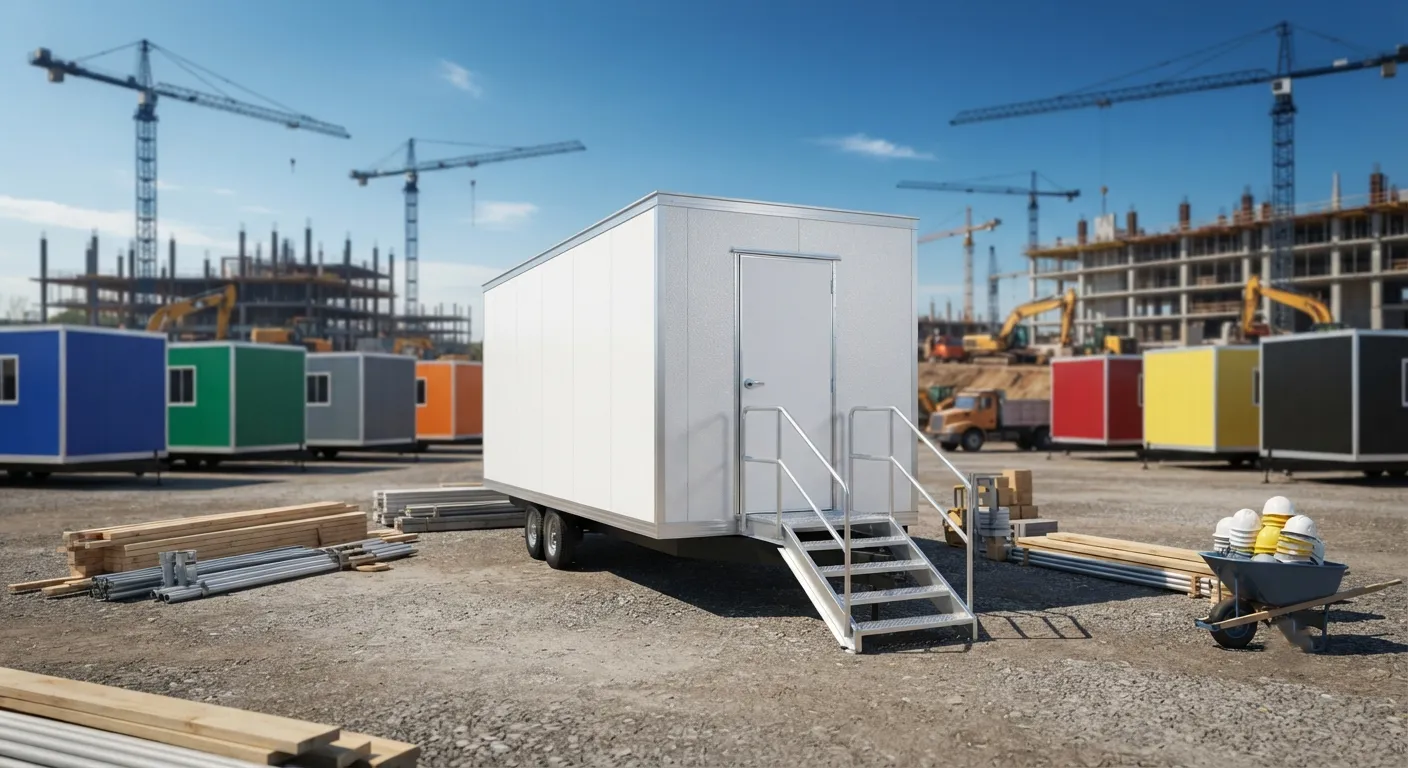
A porta potty is a single sealed unit with no plumbing hookup. A portable restroom trailer has multiple stalls, running water and sinks, closer to a real bathroom, and it's built for events or long job site stays rather than quick single-unit needs.
Next step
Get a delivery date
Tell us the address, the dates and the headcount. We size the order and confirm the route.